


Catholic Medical Quartery Vol 76 (1) February 2026
Nourishing the Luteal phase: Understanding and supporting progesterone naturally
Dr Monika Dowejko, Natural Family Planning Teachers Association.
The luteal phase - the second half of a woman’s menstrual cycle - is an extraordinary time. After ovulation, the empty follicle transforms into the corpus luteum, a tiny but mighty gland that produces progesterone. This hormone not only prepares the uterus for a possible pregnancy but also profoundly affects mood, sleep, immunity, and metabolism.
Yet, for many women today, this phase is under pressure. Stress, dietary extremes, alcohol, and certain medications can all shorten or disrupt the luteal phase, leading to what we call “luteal phase deficiency (LPD)” [1] - a state of inadequate progesterone production or action.
The Hidden Costs of a Shortened Luteal Phase
When progesterone levels drop too soon or fail to rise sufficiently, the luteal phase may last fewer than 11 days. This can mean difficulty conceiving, but even beyond fertility, women may experience fatigue, anxiety, poor sleep, heavier or more painful periods, and worsened PMS symptoms.
From a physiological standpoint, several factors contribute to LPD:
- Endocrine disruptions – Low FSH and LH can impair follicle development
- Hormonal resistance – In some conditions like PCOS or endometriosis, the endometrium becomes resistant to progesterone’s effects.
- Metabolic and thyroid disorders – Hypothyroidism and hyperprolactinemia can suppress GnRH and LH release, reducing progesterone output.
- Lifestyle influences – Excessive stress, poor diet, alcohol, and certain medications can disturb the delicate hormonal balance.
Even small lifestyle changes can make a significant difference. For instance, alcohol consumption as few as three times per week can delay ovulation and shorten the luteal phase. Chronic stress activates the “fight or flight” response, which literally diverts the brain’s resources away from reproduction.
All steroid hormones - including progesterone, oestrogen, and testosterone - are made from cholesterol. That means healthy fat intake is essential for hormone balance.
Extremely low-fat diets, often pursued in the name of health or weight management, can inadvertently starve the body of the raw materials it needs to produce progesterone.
Healthy fats to include:
Olive oil, avocado,
nuts, and seeds
Oily fish, like salmon and sardines
Flax and chia seeds
Small amounts of high-quality
saturated fats
These fats not only provide cholesterol but also support cell membrane fluidity, inflammation control, and hormone receptor sensitivity. Conversely, diets too low in fat can impair ovulation and shorten the luteal phase.
The Brain-Hormone Connection: Progesterone’s Hidden Power
Progesterone’s influence extends far beyond reproduction. In the brain, it converts into a compound called “allopregnanolone” a natural neurosteroid that enhances the calming GABA system — the same pathway targeted by many antianxiety medications.
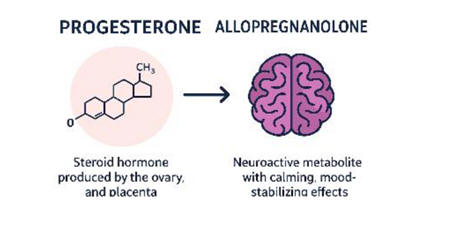
This is why progesterone is sometimes called “nature’s antidepressant”. When levels drop, many women feel “on edge,” sleep poorly, or experience heightened anxiety before menstruation. Research shows that restoring natural progesterone levels can help improve sleep quality, mood stability, and overall wellbeing.
It is important to note that synthetic hormones used in contraceptive pills are not identical to natural progesterone. They cannot be converted into allopregnanolone and therefore lack these neurological benefits. This may explain why mood changes and anxiety are among the most commonly reported side effects of hormonal contraception.
Medications, Stress, and Modern Challenges
Certain medications can also alter hormonal rhythms. For example, the antidepressant Wellbutrin (bupropion) has been reported to affect luteal phase length, highlighting how psychotropic drugs can indirectly influence fertility biomarkers. This case study has been described in detail on Femina Medica Database[2] .
Chronic stress, emotional, physical, or metabolic, is another key player. Studies [3] even show that the ovary contains sympathetic nerves responsive to stress hormones, directly influencing follicle development. In other words, the ovary “feels” stress. Supporting relaxation and stress resilience is therefore central to hormonal balance.
The Gift of Progesterone
Progesterone truly is a monthly gift — bringing calm, restorative sleep, stable mood, lighter periods, stronger bones, and protection for fertility and breast health. Recognizing its value is the first step toward supporting it naturally.
References:
- American Society for Reproductive Medicine. (2021). Diagnosis and treatment of luteal phase deficiency: A committee opinion. Fertility and Sterility, 115(6), 1416– 1423. https://doi.org/10.1016/j.fertnstert.2021.02.010
- Femina Medica Database. (n.d.). Database of medications and their effects on fertility. Retrieved October 2025, from https://feminamedica.com
- Gaylor, J., et al. (2025). Comparative analysis of human and mouse ovaries across age. Science https://doi.org/10.1126/science.adx0659