


Catholic Medical Quarterly Vol 76 (3) August 2026
Book review
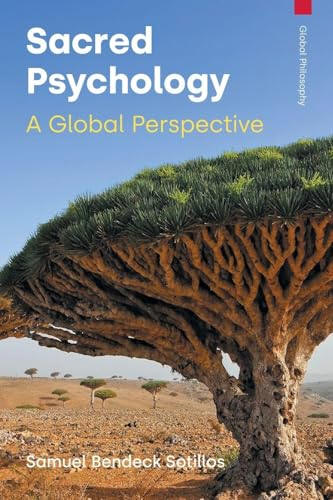
Sacred Psychology, A Global Perspective
by Samuel Bendeck Sotillos
Equinox Publishing Ltd
Reviewed by Dr
Pravin Thevasathan
 The
author has written a superb critique of psychology as practiced today. He
argues that it is materialistic and it fails to address the needs of the
whole person. The human person is both material and spiritual, and
psychology fails to address the person's spiritual needs.
The
author has written a superb critique of psychology as practiced today. He
argues that it is materialistic and it fails to address the needs of the
whole person. The human person is both material and spiritual, and
psychology fails to address the person's spiritual needs.
Modern psychology is not capable of accepting the valuable insights to be found in the great religious traditions, says the author. It is in disarray because it deems the spiritual and the metaphysical to be irrelevant. Titus Burckhardt, a leading member of the Perennialist school, claimed that psychology can only be authentic when rooted in metaphysics. In contrast to the materialist psychology of today, sacred psychology does not separate the human person either from the metaphysical or the cosmic order.
The author argues that what is presented as scientific by materialist psychologists is nothing more than the predominant opinion to be found in academic circles. There is nothing new in this: the Renaissance, the Enlightenment, Modernism, and Post-Modernism have all contributed to the desacralised outlook of the present day. Prior to the Renaissance, the West shared a common mindset with the East, an awareness of the sacred.
The author notes that materialistic psychology is trying to fill a void left by the loss of religion and it can never succeed. John Locke's ideas have paved the way for modern science to dissociate itself from the sacred. This has led Freud to interpret religious beliefs in purely non-religious psychological terms. The psychologist William James defined psychology in terms of the mind but he rejected any notion of the soul. Bertrand Russell continued this reductionist process; "What science cannot discover, mankind cannot know."
In order to recover a sacred psychology, the author turns to the great religious traditions of the world. I have a certain sympathy with this: I returned to religion after straying into an atheistic wilderness by reading Sufi and Hindu texts. As a Christian, I now uphold the uniqueness of the person of Jesus Christ: He is either mad, bad, or God. Unlike even some of my own spiritual leaders, I can no longer believe that there are many paths to God.