


Catholic Medical Quarterly Vol 76 (3) August 2026
The Passion of the Unborn
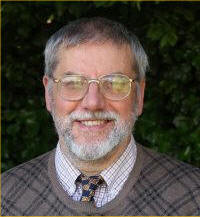
Francis Etheredge
 I
am a Catholic married layman, father of 11, 3 of whom I hope are in heaven
and an author. The three children I hope are in heaven are Charlie, who
was unexpectedly aborted many years ago by a woman who thought he or she
was a “blob of cells”; but, being a blob of cells did not explain either
the joy or the pain of this event [1]. The other two are Hilary and
Jordan, two children who were lost to my wife and I through miscarriage
and, we hope, have passed to the Father. And there are eight more children
who have filled the hearts of my wife and I and who are going through the
various steps and stages of life, and who are constantly in our prayers,
along with so many others.
I
am a Catholic married layman, father of 11, 3 of whom I hope are in heaven
and an author. The three children I hope are in heaven are Charlie, who
was unexpectedly aborted many years ago by a woman who thought he or she
was a “blob of cells”; but, being a blob of cells did not explain either
the joy or the pain of this event [1]. The other two are Hilary and
Jordan, two children who were lost to my wife and I through miscarriage
and, we hope, have passed to the Father. And there are eight more children
who have filled the hearts of my wife and I and who are going through the
various steps and stages of life, and who are constantly in our prayers,
along with so many others.
On the 6th of December, 2025, I contributed to a Webinar entitled, “Why the Unborn Matter”. The subject of my presentation was “The Catholic Faith’s Contribution to Understanding the Moment of Human Conception” [2]. In preparation for speaking, it was necessary to study and pray: to pray and study. What follows was a surprising connection between Christ and the unborn; and, therefore, for the full context, go to the presentation itself [3].
So, when it came to speaking, my opening lines were from the work of St. John Paul II who wrote an encyclical on the Holy Spirit in which he said that the Holy Spirit descended into the passion of Jesus Christ and drew out our Redemption:
‘The Holy Spirit as Love and Gift comes down, in a certain sense, into the very heart of the sacrifice which is offered on the Cross’ (41); and, as ‘Love and Gift’, ‘the Holy Spirit acted in a special way in this absolute self-giving of the Son of Man, in order to transform this suffering into redemptive love’ (40) [4].
Similarly, we need to beg the Holy Spirit to descend into the passion that the unborn are experiencing and draw out a good for the benefit of all mankind.
In what follows let us consider the following: being countless; being a gift; and being redeemed.
The Present Situation: The Countless Known by God
Numbers have a way of distancing us from what is being counted; and, if a number is in real terms beyond counting, then whatever is being counted becomes even more distanced as “the countless”. Thus the reality is that many of our children are so anonymous that God alone knows whether they existed or not: God alone knows from all eternity who existed or not [5]. But it is not only numbers that numb us, it is also the methods by which we deny our relationships to one another, whether as partners, spouses or parents, by using contraceptives which, in effect, deny the reality of the ‘one flesh’ begetting of our children. Thus, we might say, there is a “relational winter” afflicting the human race and which shows itself in innumerable social disorders from the rejection of man, male and female, children, and family life, and the multiplication of suicides, mental illnesses and estrangements.
On the one hand there are “the countless” millions aborted, both surgically and as a consequence of certain abortifacient drugs or devices.[6] In addition, it is now possible to abort at home, with abortion pills, which have resulted is some 54,000 hospital admissions in the UK alone, since 2020 [7], not to mention turning bathrooms into “triggering” rooms. On the other hand, there are “the countless” who are the consequences of in-vitro fertilization: the bringing together of sperm and egg-cell in a glass dish and all that that entails in terms of customer preference, de-selection, or sending human embryos for experimentation until death. Or, alternatively, some are given a “shelf-life” as if they are some kind of “product”. Recently, a child was thawed after 31 years, and survived, and now has been born [8]. What is more, if this type of technological abuse of human embryos increases, not only will we have the tragic situation of deaths multiplying – but there will be invention upon invention to continue the production pathway of real, human, embryonic children.
By contrast, as I have said, I have named three who have gone to the Father. Moreover, in the Scriptures, we have several examples of who was known from all eternity and named in the womb: Ishmael – (Genesis 16:11); Isaac – (Genesis 17:19); Solomon – (1 Chronicles 22:9); Josiah – (1 King 13:2); Cyrus – (Isaiah 44:26-28); John the Baptist – (Luke 1:13-17); and Jesus – (Matthew 1:21) [9]. The difference, however, is clearly that Jesus existed from all eternity as the Son of God although only from His conception as the son of a carpenter (Mt 13: 55-57). But the point remains: that whether we have named all our children or not, God knows each one of us from all eternity!
The Person-Gift
The immeasurable context of the person-gift that each one of us is is the very nature of creation itself: that out of all eternity there came to exist the gift of creation.
Thinking on, then, from the mystery of the Holy Spirit as the “Love-Gift” of God to man opens a vision of God as “Gift from Gift”; and, in making man male and female, man himself becomes a love-gift: both to himself, his peers, and to God Himself. This language of the person-gift spills out in all directions and promises to open our hearts to the realization that God has loved us from all eternity.
At the same time, therefore, we are to understand marriage as a reciprocal gift of husband and wife to each other; indeed, as the Book of Tobit says of Tobias who, on hearing of Sarah, both beautiful and from his family of faith, ‘he fell so deeply in love with her that he could no longer call his heart his own’ (Tobit 6: 18). Each person, whether male or female, ‘is the only creature on earth which God willed for itself, [and who] cannot fully find himself except through a sincere gift of himself’ (Gaudium et Spes, 24). In the case of marriage, then, neither marriage itself nor any other reason guarantees “a right to a chid”: a child is a gift. This is very concretely embodied in the nature of human conception being unpredictable; and, therefore that very unpredictability helps to establish the reality that husband and wife cannot be certain of having a child. And so, not being certain that a child will follow the mutual love-gift of husband and wife the child is, as it were, seen more clearly as a gift of God [10].
Bearing in mind the many problems that people face, perhaps especially young people or those of us who, for years, went from person to person, whether we realised it or not, as a member of the ‘hook up’[11]culture, it is necessary to grasp, perhaps in a more popular way, the merit of this language of the person-gift. So, reflecting on the mystery that each one of us is called to make a gift of ourselves, whether in marriage or in some other way, as in the religious life or the priesthood, it is good to pause and to consider the everyday experience of the gift, namely, that it is wrapped. There are many ways to wrap a present; but, essentially, it is to retain the beauty of surprise and enjoyment until the moment of a celebration and, in particular, the moment of the celebration of marriage; indeed, while we are often tempted to tear the wrapping, either a little or a lot, it is an image that speaks to people in a non-moralistic way. Similarly, with the image of a fire in a hearth. If the fire is lit in the room and not in the grate, it can burn the house down; however, a fire in the grate brings warmth, comfort and a focus for the family in the room. Furthermore, Christ did not come for the righteous but for those who need a doctor: ‘Those who are well have no need of a physician, but those who are sick. I came not to call the righteous, but sinners’ (Mk 2: 17). In other words, it is not so much that our past is the problem, as that our past can show us the need for a physician; however, we need the grace of humility to recognize that whether or not we intended it, we are the lost sheep that the Good Shepherd is looking for.
Understanding human nature and its wounds and weaknesses, however, only makes it clearer that truth alone is insufficient. Christ is the word of God who illumines our life and makes change possible. In other words there is a natural limit to human effort and even the danger that it makes us worse, as in the parable of the person whose house was cleaned up, only to become hostage to several more demons (cf. Lk 11: 24-26). In my experience of yet another failed relationship leading to three possibilities: madness; more sin; or suicide – it was the realization that reason and evidence was not enough; and, as it happened, I had started studying theology and was probably reading for an essay when I read: if God can create everything out of nothing he can make a new beginning for the sinner (Catechism of the Catholic Church, CCC, 298). And, without effort, I returned to a charism that formed people in the faith called the Neocatechumenal Way and went on a pilgrimage. Within a year or so, I was at work in a laundry as a labourer and married; and now, almost thirty years later, it is very clear to me that God acts in His word: the same word which brought everything out of nothing and a new beginning in my life. And so, there is a further gift, as it were, the gift of the power of the word of God to change what we cannot change. As I say elsewhere [12], St. Jerome said “Ignorance of Scripture is ignorance of Christ; but ignorance of Christ is self-ignorance!
Christ Redeemed us from the first instant of His existence
When it comes to the gift of gifts, the Incarnation of the Son of God, it is already clear that God is doing a work of gift upon gift or, to use the biblical language, of ‘grace upon grace’ (John 1: 16).
Returning more directly to the theme of this piece, it is clear that Christ did not come to jump start redemption but to enter fully into our human reality and to renew it from within: from within the very human event of embryonic existence and development. For, as one of the Father’s of the Church says: ‘That which was not assumed has not been healed; but that which is united to God, the same is saved’[13]. In other words, the unborn matter because they matter to God! Not only did Christ enter into the most vulnerable state of being human, but He also did so in the context of a King who saw Him as a threat and tried to kill Him; and, indeed, that is very much the situation today as many “powerful” people see the unborn as a threat to the planet and actively “cull” the human race. But let us not forget the painful and terrible irony of this: that those who have been given the gift of life extinguish that same gift given to others.
So Christ begins His own work of redeeming human nature by fully entering into it, literally, through becoming incarnate in the womb of the Virgin Mary; and, in being incarnate, receiving the unblemished flesh of Mary as His own [14]. For, whatever the hidden details of the mystery of the Incarnation of the Son of God, it nevertheless entailed the transformation of Mary’s egg-cell into a human embryonic child. This transformation, which is taken to be from the first instant of His existence, whole and entire, continues uninterrupted until the person present from the beginning is made manifest; and, therefore, until the psychological interiority of the biological processes of human development culminate in the manifestation of the person.
And, according to Gaudium et Spes of the Second Vatican Council, the Incarnation is not just a personal event, as it were, for Jesus, but it is an event of untold significance for us all. In the words of the Council:
‘Since human nature as He assumed it was not annulled, (22) by that very fact it has been raised up to a divine dignity in our respect too. For by His incarnation the Son of God has united Himself in some fashion with every man’(from paragraph 22 [15]).
While it is unclear, then, what concrete benefit there is to the unborn child, who is in a certain way ‘united to Christ, it may help to draw upon what Pope St. Paul VI said: ‘Human life is sacred – all men must recognize that fact’, Our Predecessor Pope John XXIII recalled, ‘from its very inception it betrays the creating hand of God’ [16].
On the one hand, some people do discover the sacredness of human life and abandon their participation in the in-vitro fertilization industry. One such person was Laura Elm who wrote about her experience in Mary and Bioethics: An Exploratio[;[17] she said that becoming pregnant made her realize the reality that the embryonic child is a person:
‘Laura Elm … founded Sacred Heart Guardians and Shelter (SHG) in 2017. Laura, it seems, while working ‘on the business side of the infertility business’ fell pregnant with her first child, who ‘was born on March 25th, the Feast of the Annunciation’! Laura’s ministry is to offer to bury the embryonic children who have died because of the industrial process of the in-vitro fertilization industry.
Similarly, ‘an embryologist discovered that the reality of human embryonic development is a witness, in its own way, to the presence of the person from the beginning: ‘I can remember always instinctively pausing each time my hand was over the biohazard disposal container, as if to double-check that I was, in fact, discarding the correct [human] embryos. Maybe it was also something else that caused me to pause.’ And he goes on to say, especially concerning the uncertainty around what was or was not a “viable” human embryo: ‘Despite having some cells that are abnormal, an early embryo has the capacity to “self-correct.” It does this by selectively pushing the abnormal cells out and replicating the normal cells. In fact, it appears that the abnormal cells become part of the placenta, leaving the normal cells to become the fetus. This is a remarkable biological process that is somehow “programmed” into these primitive cells’[18].
On the other hand, however difficult it is for us to understand, the very fact that St. John XXIII said that ‘Human life is sacred … [because] ‘from its very inception it betrays the creating hand of God’ means that we are not created cold, as it were, but we come with love from God who is Love (cf. 1 John 4: 8). Indeed, God the Creator has already “passed over” the chasm between His own mysterious holiness and our being called into existence in original sin: that original deficit which was passed to the whole human race because of the personal sin of Adam and Eve. Thus the magnificent grace of human conception is already God stepping closer to us in the very nature of bringing each one of us to exist; for, in reality, the flesh of sperm and egg-cell, while necessary to the transmission of human life, are incapable of bringing the whole person to exist from “parts”. It is, in other words, God Himself who brings the whole person to exist, one in body and soul (Gaudium et Spes, 14).
So God, having already stepped over original sin to bring us to exist, will not cease to furnish what we need for eternal life: for that everlasting relationship to Him who is the communion of the Blessed Trinity. And, therefore, we live in hope that God, who has not spared His own Son and brought the good of our redemption out of His passion, will remember the passion of the unborn and bring an unbounded good from it.
References and footnotes
- An account of this experience can be found in the pages of Etheredge, “The Prayerful Kiss”; the particular piece, with a prose introduction, is called “Indelible”: https://enroutebooksandmedia.com/theprayerfulkiss/.
- [2] ITEST: https://faithscience.org/why-unborn-matter/.
- Published presentation: “Why do the Unborn Matter”: https://www.youtube.com/watch?v=t4a_54lEJXM.
- St. John Paul II, Dominum et Vivificantem : https://www.vatican.va/content/john-paul-ii/en/encyclicals/documents/hf_jp-ii_enc_18051986_dominum-et-vivificantem.html.
- Although not strictly relevant here, if God does know us from all eternity this is especially relevant to people’s confusion about their identity; cf. for example, Etheredge, Transgenderism: A Question of Identity, already published; and, shortly, it will be followed by Transgenderism Two: Evidence and Identity, forthcoming from En Route Books and Media.
- “Contraception and abortion”: The following can prevent the implantation of a human embryonic child: ‘Morning After Pill’ and ‘IUDs: Intra-Uterine Device: https://www.bbc.co.uk/ethics/contraception/contraception_abortion.shtml#:~:text=Some%20methods%20of%20contraception%20act,been%20criticised%20as%20possibly%20abortifacient.
- October 13th, 2025, “54,000 hospital admissions as a result of pills-by-post”: https://spuc.org.uk/54000-hospital-admissions-as-a-result-of-pills-by-post/?inf_contact_key=c395e4188750b3ea329b349a1dd774c209c74070ac2bf3cfa7869e3cfd4ff832.
- By Julio Tudela and Cristina Castillo of the Bioethics Observatory, Published On: September 16th, “Baby born after 31 years of embryonic cryopreservation”: https://bioethicsobservatory.org/2025/09/baby-born-after-31-years-of-embryonic-cryopreservation/48072/?utm_source=mailpoet&utm_medium=email&utm_source_platform=mailpoet.
- Jeff Cavins, August 28th 2020, “Say His Name! Name the Baby in the Womb”: https://ascensionpress.com/blogs/podcasts/say-his-name-name-the-baby-in-the-womb?srsltid=AfmBOorGnSlxG5EZPNb_VIvLDo9UldmxO0v-pLPstaSB5ibtbItH-U22.
- A whole book is dedicated to this subject of the inherent nature of the inseparability of spousal union and the possibility of being open to life: Etheredge, Human Nature: Moral Norm: https://enroutebooksandmedia.com/humannature/.
- Randall Woodard, November 27th, 2017, “Our Current Youth Culture and its Upcoming Impact on Successful Marriages”: https://www.hprweb.com/2017/11/our-current-youth-culture-and-its-upcoming-impact-on-successful-marriages/.
- E.g. Etheredge, “Time! Ladies and Gentlemen: A Few Thoughts on
Last Things–In response to James Sale’s Trilogy: HellWard, StairWell, and
DoorWay”:
https://enroutebooksandmedia.com/time/. - The Faith of the Early Fathers, vol 2, passages selected and translated by William Jurgens, (Collegeville, Minnesota: The Liturgical Press, 1979), p. 41.
- These ideas are supported by at least three published books: The Human Person: A Bioethical Word; Conception: An Icon of the Beginning; and Mary and Bioethics: An Exploration. Furthermore, there is a forthcoming book called The Salvation of Embryonic Human Life: Beginning with the Immaculate Conception and the Incarnation. The publisher is En Route Books and Media.
- Gaudium et Spes : https://www.vatican.va/archive/hist_councils/ii_vatican_council/documents/vat-ii_const_19651207_gaudium-et-spes_en.html.
- Humanae Vitae, 13: https://www.vatican.va/content/paul-vi/en/encyclicals/documents/hf_p-vi_enc_25071968_humanae-vitae.html.
- Etheredge, Mary and Bioethics: https://enroutebooksandmedia.com/maryandbioethics/.
- Dr. Craig Turczynski is a Reproductive Physiologist, Certified Teacher of the Billings Ovulation Method, Director of Strategy and Scientific Affairs for BOMA-USA, and currently serves on the board of advisors for Sacred Heart Guardians and Shelter: Pages 159-160 of Etheredge, Unfolding a Post-Roe World: (the e-book version): https://enroutebooksandmedia.com/post-roe/.