


Catholic Medical Quarterly Vol 76 (3) August 2026
Church teaching on IVF - safeguarding life at its most vulnerable
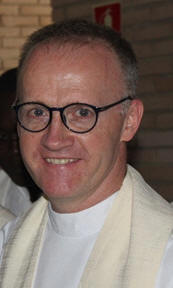
Fr James McTavish
 Although
many Catholics are aware that the Church opposes “test-tube babies,” far
fewer understand the reasons behind this teaching. Some assume the Church
is simply anti-science or opposed to technological progress. This
misunderstanding often arises when people receive their understanding of
Church teaching from mass media rather than from the Church herself.
Although
many Catholics are aware that the Church opposes “test-tube babies,” far
fewer understand the reasons behind this teaching. Some assume the Church
is simply anti-science or opposed to technological progress. This
misunderstanding often arises when people receive their understanding of
Church teaching from mass media rather than from the Church herself.
The Church’s mission is to proclaim a resounding “yes” to life — and therefore a clear “no” to everything that attacks human life, such as murder, genocide, human trafficking, and similar evils. In vitro fertilisation (IVF), the technique used to create so-called “test-tube babies,” is considered fundamentally contrary to the dignity of human life.
The first IVF baby, Louise Brown, was born in the United Kingdom in 1978. The technique was developed by gynaecologist Patrick Steptoe, physiologist Robert Edwards (who later received the Nobel Prize in Medicine), and embryologist Jean Purdy. Nine years later, in 1987, the Vatican issued its first major moral evaluation of these new reproductive technologies in the document Donum Vitae (“The Gift of Life”). This teaching was later reaffirmed and deepened in Dignitas Personae (“The Dignity of the Person”) in 2008.
The Church rejects IVF for three principal reasons.
First, the procedure involves the creation — and very often the destruction — of large numbers of human embryos. Globally, millions of human embryos are produced and discarded each year in pursuit of a relatively small number of live births. Even in the best clinics, the vast majority of embryos created never result in a live birth. In the United States alone, it is estimated that more than 1.5 million embryos are created annually, while only around 90,000 babies are born through IVF.
Second, IVF treats the child as a product of human manufacturing rather than as a gift. As Donum Vitae teaches, the child “cannot be desired or conceived as the product of an intervention of medical or biological techniques; that would be equivalent to reducing him to an object of scientific technology” (Donum Vitae II, B,4,c). The IVF industry in the United Kingdom is now worth approximately £600 million per year and continues to grow rapidly. With such large financial interests at stake — there are already more than 35 IVF clinics in London alone — it becomes easier to understand the financial aspect of the rapid growth of this business. As St Paul warned long ago, “the love of money is a root of all kinds of evil” (1 Timothy 6:10).
Third, IVF separates the unitive and procreative dimensions of the marital act. Humanae Vitae (n. 12) teaches, the inseparable connection, established by God, which man on his own initiative may not break, between the unitive significance and the procreative significance which are both inherent to the marriage act. The reason is that the fundamental nature of the marriage act, while uniting husband and wife in the closest intimacy, also renders them capable of generating new life—and this as a result of laws written into the actual nature of man and of woman. And if each of these essential qualities, the unitive and the procreative, is preserved, the use of marriage fully retains its sense of true mutual love and its ordination to the supreme responsibility of parenthood to which man is called.
While this point is more theological in nature, the core issue is clear: in IVF, the physical intimacy of the spouses is completely disconnected from the creation of the new human life, which is instead carried out by technicians in a laboratory. Pope Francis has addressed this directly: “Let us not fall into the sin of trying to replace the Creator. We are creatures, not omnipotent. Creation comes before us and must be received as a gift” (Amoris Laetitia, n. 56).
Infertility
The Church expresses deep compassion for the growing number of couples who suffer from infertility — now estimated to affect 1 in 6 couples worldwide. There are many examples of infertility in the Old and New Testament, so the Church is both biblically and pastorally sensitive to this issue. “Isaac prayed to the Lord on behalf of his wife, because she was childless. The Lord answered his prayer, and his wife Rebekah became pregnant” (Genesis 25:21).
Already in 2004, Pope John Paul II encouraged scientists in an address to the Pontifical Academy for Life: “I would like to encourage scientific research that seeks a natural way to overcome the infertility of spouses, and likewise to urge all specialists to perfect those procedures that can serve this end.” Donum Vitae thus teaches:
The community of believers is called to shed light upon and support the suffering of infertile couples… Spouses are called to find in it an opportunity for sharing in a particular way in the Lord’s Cross, the source of spiritual fruitfulness… Physical sterility can be the occasion for other important services to the life of the human person, for example, adoption, various forms of educational work, and assistance to other families and to poor or handicapped children (Donum Vitae V, II, B, 8,d).
Conclusion
With an estimated twelve million babies born worldwide through IVF to date, it is increasingly likely that we will encounter children conceived in this way. With her usual maternal concern, the Church reminds us that “although the manner in which human conception is achieved with IVF and ET cannot be approved, every child who comes into the world must nevertheless be accepted as a living gift of divine goodness and must be raised with love” (Donum Vitae II, B5).
What the Church carefully warns against is the inherent anti-life bias of IVF. The foreboding remarks of one of its pioneering founders hint at this. In an interview reported in The Times, Professor Robert Edwards stated, “I wanted to find out exactly who was in charge — whether it was God Himself or scientists in the laboratory.” And what did he conclude? “It was us,” he replied with a triumphant smile. Without the light of God’s revelation, even the intellect of the most brilliant scientist can remain in the shadows. That is why the Church’s Magisterium is so enlightening, and much needed: “the human being is to be respected and treated as a person from the moment of conception” (Evangelium Vitae, n. 60).
The mission of the Church is to safeguard life, especially when it is fragile and most vulnerable. We must do all we can to defend the dignity of the human person, especially the voiceless and vulnerable. Pope Francis pertinently asked, “How can we genuinely teach the importance of concern for other vulnerable beings, however troublesome or inconvenient they may be, if we fail to protect a human embryo?” (Laudato Si’, n. 120). Our Lord once said, “Whatever you did for one of the least of these brothers and sisters of mine, you did for me” (Mt 25:40). For this reason, in many Church documents on bioethics, the human embryo is recognised as “the least of these” — the smallest among men and women, and therefore in need of special care and protection. The Church’s mission to protect the poor “implies courageous opposition to all those practices which result in grave and unjust discrimination against unborn human beings, who have the dignity of a person, created like others in the image of God. Behind every “no” in the difficult task of discerning between good and evil, there shines a great “yes” to the recognition of the dignity and inalienable value of every single and unique human being called into existence” (Conclusions, Dignitas Personae).